
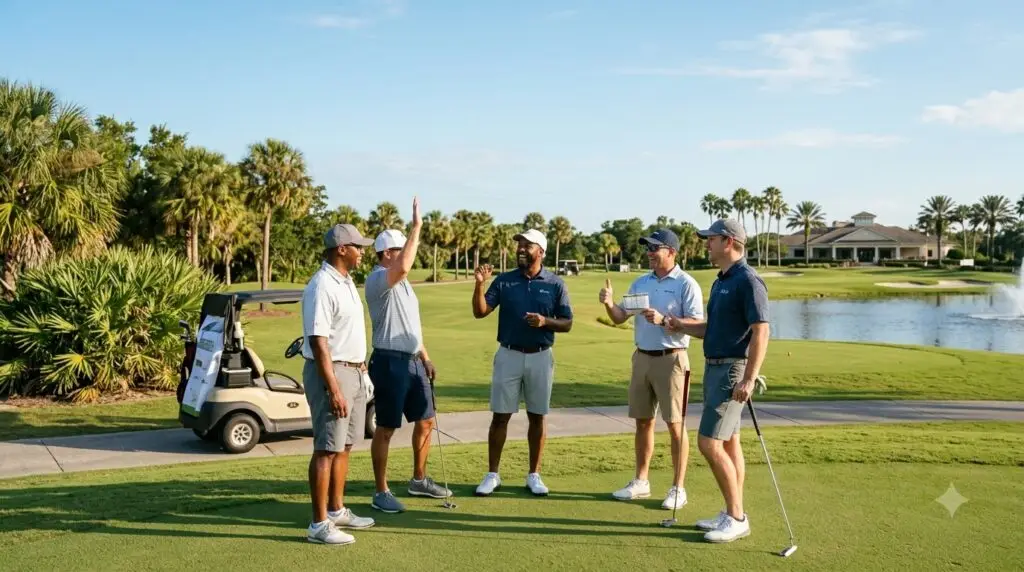
A successful golf outing should feel simple to the people attending.
Guests arrive, check in, find their foursome, collect their materials and head to the course knowing exactly what happens next. After the round, they gather for food, awards, sponsor recognition or conversation without waiting for the organizers to invent a closing plan in the parking lot.
Creating that smooth experience requires more than reserving several tee times.
Organizers need to coordinate:
- Event purpose
- Golfer count
- Budget
- Format
- Start time
- Team assignments
- Carts
- Registration
- Pace of play
- Food and beverages
- Contests
- Sponsorships
- Weather procedures
- Scoring
- Post-round activities
Northdale Golf Club provides public golf and organized event services for groups planning corporate, charity and social golf outings in Tampa. Its official event information lists coordination, food-and-beverage packages, custom signage, scorekeeping, audiovisual support and reserved gathering spaces.
The best outing is not necessarily the biggest or most elaborate.
It is the one where the format, schedule and budget match the people attending.
Quick Answer: How Do You Plan a Golf Outing in Tampa?
Use this sequence:
- Define the purpose of the event.
- Estimate the golfer and total guest count.
- Create a complete budget.
- Request a written course proposal.
- Select the right golf format.
- Choose the date and start time.
- Build registration and team assignments.
- Confirm contests, scoring and sponsorships.
- Plan food and post-round activities.
- Establish pace-of-play rules.
- Confirm weather and lightning procedures.
- Send complete guest instructions.
- Operate the event from a written timeline.
- Review expenses and results afterward.
A smaller event may only require several consecutive tee times and a post-round meal.
A larger corporate or charity event may require structured registration, event signage, scoring, food service, sponsors, volunteers and a dedicated course contact.
1. Define the Purpose Before Planning the Details
Begin by identifying why the event exists.
A corporate outing, charity fundraiser and private celebration may all use the same golf course, but they require different planning.
Corporate golf outing
The goals may include:
- Client appreciation
- Employee recognition
- Team building
- Business networking
- Relationship development
- Brand presentation
The event should give guests time to interact without turning every conversation into a sales presentation.
Charity golf tournament
A fundraiser may require:
- A defined financial target
- Golfer registration
- Sponsorship packages
- Donor communication
- Contest opportunities
- Raffles or auctions
- Mission messaging
- Financial reporting
The final result should be measured by net funds raised, not merely the number of registrations.
Social or private outing
A birthday, association or family event may only need:
- Golf
- Carts
- Simple team assignments
- A casual format
- Food and beverages
- A short awards moment
Avoid building a large tournament structure when the group mainly wants a relaxed round together.
2. Estimate Golfers and Total Attendance Separately
The number of golfers affects course operations.
The total number of attendees affects food, seating and post-round planning.
Determine:
- Expected golfer count
- Expected number of foursomes
- Individual or team registration
- Number of non-golfing meal guests
- Sponsor attendance
- Volunteer requirements
- Vendor or photographer attendance
The golfer count influences:
- Tee-time requirements
- Starting format
- Carts
- Scorecards
- Team assignments
- Contest participation
- Expected round duration
The total attendance influences:
- Food quantities
- Beverage service
- Seating
- Parking
- Awards
- Gathering-space requirements
Confirm the course’s practical capacity before promoting a large attendance target.
3. Build a Complete Event Budget
Do not calculate the budget using only the advertised golfer rate.
Potential expenses include:
- Green fees
- Cart fees
- Food and beverages
- Taxes
- Service charges
- Registration software
- Payment-processing fees
- Signs
- Scorecards
- Prizes
- Gifts
- Photography
- Audio equipment
- Insurance
- Additional staffing
- Contingency
Use:
Total event cost =
Golf and carts
+ food and beverages
+ event materials
+ registration and payment expenses
+ prizes and gifts
+ staffing or professional services
+ taxes, fees and contingency
For a corporate outing:
Cost per attendee = Total event cost ÷ total attendees
For a fundraiser:
Net funds raised = Total event revenue − total event expenses
A charity event that collects $30,000 and costs $22,000 has raised $8,000, not $30,000.
Add a contingency
Reserve part of the budget for:
- Last-minute signs
- Additional meals
- Replacement prizes
- Guest-count changes
- Weather-related adjustments
- Unexpected service charges
A contingency of approximately 5% to 10% may help, depending on the size and complexity of the event.
4. Request a Written Proposal From the Course
The proposal should explain more than the per-golfer price.
Ask it to include:
- Available dates
- Available start times
- Minimum golfer count
- Maximum golfer count
- Starting options
- Green and cart fees
- Practice access
- Scorekeeping
- Contest support
- Signage
- Food packages
- Beverage options
- Gathering space
- Setup access
- Deposits
- Final-count deadline
- Cancellation terms
- Weather policy
- Taxes and service charges
Northdale’s event page currently lists event coordination, food-and-beverage packages, custom signage and scorekeeping, audiovisual support, and indoor and patio gathering spaces. Exact inclusions should be confirmed in the proposal for the selected date and group size.
Do not rely on verbal assumptions when food, weather, sponsor deliverables and deposits are involved.
5. Select the Right Golf Format
The format affects pace, competitiveness and beginner comfort.
Four-person scramble
A scramble is usually the most practical format for mixed-skill corporate, charity and social outings.
Each golfer hits a shot. The team selects its preferred result, and all players continue from that location.
A scramble can provide:
- Team participation
- Less individual pressure
- Faster recovery from poor shots
- Easier scoring
- Greater beginner involvement
A scramble does not automatically produce a fast round. Teams still need appropriate tees, clear rules and a maximum-score policy.
Best ball
Each player completes the hole with their own ball, and the team records its lowest individual score.
Best ball may suit more experienced golfers who want individual competition within a team structure.
Because every golfer normally completes each hole, it can take longer than a scramble.
Shamble
Everyone hits a tee shot. The team selects one drive, and each golfer plays their own ball from that point.
A shamble creates more individual golf while reducing the effect of difficult tee shots.
Individual stroke play
Individual stroke play may suit a competitive group, but it is generally less forgiving for beginners and mixed-ability events.
Nine-hole event
A nine-hole outing can work for:
- After-work events
- Smaller companies
- Limited budgets
- Shorter social outings
- Less experienced groups
Confirm which formats and start structures are available before publishing the event details.
6. Choose Tee Boxes According to Ability
Different golfers in the same foursome can use different tee boxes.
Tee selection should consider:
- Typical driving distance
- Golf experience
- Forced carries
- Approach-shot distance
- Course conditions
- Expected pace
Northdale’s golf course provides four tee-box options, allowing participants to choose a more appropriate playing distance.
Do not assign tees based only on age, gender or the motivational speech one golfer gives beside the first tee.
Playing from a suitable distance can reduce unnecessary shots, ball searches and frustration.
7. Choose the Date and Start Time Carefully
Tampa golf-event planning must account for heat, humidity, thunderstorms and daylight.
Organizers can review Northdale’s guide to choosing the best tee times in Tampa based on weather, pace, daylight and group ability.
The National Weather Service identifies May 25 through October 10 as the typical rainy-season period for most of West Central Florida. The season is generally associated with warm, humid conditions and frequent showers and thunderstorms, although the exact timing varies by year.
Consider:
- Seasonal weather
- Hourly temperature
- Heat index
- Thunderstorm probability
- Sunrise and sunset
- Guest travel time
- Registration duration
- Expected pace
- Meal timing
- Post-round plans
Earlier events
An earlier start may offer:
- Lower heat exposure
- More daylight
- More time for post-round activities
- A better chance of finishing before common afternoon storms during warmer months
Mid-morning events
Mid-morning may provide:
- Easier travel
- More check-in time
- A relaxed warm-up
- Convenient meal timing
The round may continue into hotter or stormier afternoon conditions.
Afternoon events
An afternoon outing may work for:
- After-work groups
- Shorter formats
- Value-focused events
- Flexible participants
Organizers should confirm daylight, weather policy and whether everyone is expected to finish 18 holes.
Northdale advertises weekday and twilight golf specials, but group organizers should verify whether promotional rates apply to organized outings and what services are included.
8. Create a Simple Registration Process
Registration should collect only the information necessary to operate the event.
Useful fields may include:
- Name
- Phone number
- Company or organization
- Playing partners
- Approximate skill level
- Dietary requirements
- Rental requirements
- Accessibility needs
- Payment status
- Sponsor affiliation
- Emergency contact
For team registration, designate one person as the captain.
This prevents four slightly different versions of the same foursome from arriving in the spreadsheet wearing separate spellings.
Send an immediate confirmation
The confirmation should include:
- Event date
- Venue
- Arrival time
- Start time
- Format
- What is included
- Food information
- Dress expectations
- Payment status
- Weather policy
- Contact details
9. Build Balanced Foursomes
For mixed-skill events, avoid placing all beginners together unless they request it.
A balanced group may include:
- One experienced golfer
- One or two intermediate golfers
- One newer golfer
For corporate events, team assignments may also consider:
- Departments
- Clients and hosts
- New networking opportunities
- Existing relationships
- Seniority
Avoid pairing one guest with three people whose only objective is selling something for four hours.
The golf should help create conversation, not capture the guest in a moving conference room.
10. Organize Check-In and Cart Assignments
Check-in shapes the guest’s first impression.
Prepare:
- Alphabetical registration list
- Team list
- Cart assignments
- Tee-time or starting information
- Scorecards
- Rules sheet
- Contest instructions
- Food details
- Sponsor materials
- Contact information
A golfer should be able to:
- Confirm attendance
- Receive materials
- Locate the team
- Move toward the cart or practice area
Assign one organizer to manage exceptions such as:
- No-shows
- Late arrivals
- Team changes
- Missing payments
- Additional meal guests
- Dietary questions
Do not force the entire registration line to observe one missing golfer’s administrative biography.
11. Add Contests Without Overcomplicating the Round
Contests can increase participation and give golfers more than one way to win.
Possible contests include:
- Closest to the pin
- Longest drive
- Straightest drive
- Longest putt
- Putting contest
- Best team score
- Best team name
Choose contests based on the group.
A beginner-friendly event may benefit from a putting contest or team award. A competitive outing may use traditional skill contests.
Confirm:
- Contest location
- Eligibility
- Measurement method
- Tie-breaking rule
- Prize
- Person responsible for verification
Northdale lists custom signage and scorekeeping among its event services, which may support contest identification and result tracking when included in the event agreement.
Too many contests can produce a closing ceremony with more categories than the round had holes.
12. Structure Sponsorships for Clear Value
Sponsorships may offset corporate-event costs or increase the amount a charity event can raise.
Possible packages include:
- Presenting sponsor
- Meal sponsor
- Registration sponsor
- Contest sponsor
- Hole sponsor
- Scorecard sponsor
- Awards sponsor
Each sponsorship should explain:
- Price
- Sign placement
- Logo dimensions
- Golfer entries
- Meal tickets
- Digital recognition
- Speaking opportunities
- Category exclusivity
- Submission deadline
Do not promise sponsors guaranteed customers, leads or exposure figures unless those results can actually be measured.
Keep financial records clear
Track:
- Sponsorship invoices
- Payments received
- In-kind donations
- Sponsor benefits delivered
- Printing and sign expenses
- Net contribution to the event
For charity events, sponsors should receive a concise post-event summary showing attendance, event photographs and confirmed fundraising results.
13. Plan Food, Beverages and the Post-Round Program Together
Food is part of the event timeline, not a decorative side quest.
Possible options include:
Before golf
- Coffee
- Light breakfast
- Bottled water
- Grab-and-go food
During golf
- Packaged snacks
- Approved beverage service
- Turn service, when available
After golf
- Appetizers
- Buffet
- Casual meal
- Awards meal
- Hosted or cash bar
Northdale’s event information lists breakfast buffets, food-and-beverage packages and customizable bar options. Its restaurant and bar offer indoor and patio seating, casual food, beer and cocktails.
Confirm:
- Outside-food policy
- Alcohol-service policy
- Hosted, ticketed or individual purchases
- Dietary accommodations
- Final meal-count deadline
- Taxes and service charges
- Gratuity
- Food timing during a weather delay
Build a concise closing program
The post-round gathering may include:
- Food and beverages
- Final scoring
- Contest prizes
- Sponsor recognition
- Charity message
- Group photographs
- Thank-you remarks
Keep it organized and brief.
Golfers are more likely to stay when food is ready, scores are calculated and nobody plans to recite every sponsor’s company history.
14. Establish Pace-of-Play Rules
Pace affects:
- Food timing
- Awards
- Staff schedules
- Transportation
- Guest satisfaction
Use:
- Foursomes
- Appropriate tee boxes
- Scramble format for mixed-skill events
- Ready golf when safe
- Short ball searches
- Maximum-score rules
- Clear starting instructions
The Rules of Golf encourage safe and responsible ready golf in stroke play. Players are also advised to prepare in advance and normally make a stroke within 40 seconds after being able to play.
A scramble may use a rule such as:
Once the team reaches double par on a hole, record the maximum score and continue.
Also publish the tie-breaking method before play begins.
Possible methods include:
- Back-nine comparison
- Final-hole sequence
- Scorecard playoff
- Putting playoff
Choosing the tie-breaker after seeing the scores is not tournament management. It is competitive archaeology.
15. Create a Weather and Lightning Procedure
Weather planning should answer:
- Who monitors conditions?
- Who stops play?
- How are golfers notified?
- Where should participants seek shelter?
- Who decides whether play resumes?
- How is a shortened round scored?
- What happens to food and awards?
- What credit or rain-check policy applies?
The National Weather Service advises outdoor-sports organizers to create a lightning plan covering weather monitoring, suspension decisions, safe shelter, communication and resumption procedures.
Participants should follow the course’s instructions immediately when play is suspended.
A golf cart, tree or open shelter should not be treated as a reliable lightning shelter. Use the location designated by the course and safety officials.
Send the weather procedure before the event so guests are not searching through messages while the sky begins performing electrical theatre.
16. Build a Realistic Day-of Timeline
A sample morning timeline might look like this:
| Time | Activity |
| 7:00 a.m. | Organizer arrival and setup |
| 7:30 a.m. | Guest check-in |
| 8:00 a.m. | Practice, breakfast and team gathering |
| 8:20 a.m. | Welcome, safety and format briefing |
| 8:30 a.m. | Golf begins |
| 1:00 p.m. | Estimated finishing window |
| 1:30 p.m. | Food and score submission |
| 2:00 p.m. | Awards and sponsor recognition |
| 2:30 p.m. | Informal networking |
| 3:00 p.m. | Event concludes |
This is an example, not a guaranteed round duration.
Include buffer time for:
- Late arrivals
- Weather
- Scoring
- Food setup
- Group photographs
- Award preparation
17. Keep Opening Instructions Short
Before the round, cover:
- Welcome
- Event purpose
- Safety
- Format
- Pace rules
- Contest instructions
- Food and closing location
- Sponsor recognition
The opening should prepare golfers to play.
It should not become a keynote conference whose breakout rooms happen to contain bunkers.
Why Northdale Golf Club Fits Golf Outings in Tampa
Northdale is a public Tampa golf course with no membership requirement. Its Ron Garl-designed layout includes 18 holes, par 72, four tee boxes, ponds, mature oaks and rolling fairways. The course also lists cart rentals, a practice green, pro shop essentials and online tee-time booking through Chronogolf.
For organized outings, Northdale lists:
- Golf group days
- Corporate, charity and social events
- Event coordination and setup
- Food-and-beverage packages
- Custom signage
- Scorekeeping
- Audiovisual support
- Indoor and patio gathering areas
This combination allows an organizer to coordinate the round and post-round gathering at one location.
The exact package, capacity, pricing and availability must still be confirmed through a current proposal.
12 Questions to Ask Before Booking Northdale
- Which dates and start times are available?
- How many golfers can the event include?
- Which starting structures are available?
- What is included in the golfer price?
- Are carts and practice access included?
- Can the course provide scorekeeping and contest setup?
- Which signage and branding options are available?
- Which food-and-beverage packages fit the group?
- Which gathering spaces can be reserved?
- When are the deposit and final headcount due?
- What are the cancellation and weather policies?
- Who will be the primary event contact?
These questions cover the major booking decisions without repeating the full planning checklist.
Final Golf Outing Checklist
Event foundation
- Purpose confirmed
- Budget approved
- Date selected
- Guest target established
- Course proposal reviewed
- Agreement signed
Golf operations
- Format selected
- Tee assignments planned
- Foursomes created
- Carts confirmed
- Scoring finalized
- Contests selected
- Pace rules written
Guest experience
- Registration opened
- Confirmation sent
- Food selected
- Dietary needs collected
- Gathering space reserved
- Awards prepared
Event safety
- Weather monitored
- Lightning procedure confirmed
- Emergency contacts prepared
- Course contact identified
- Guest-alert process established
Final week
- Headcount submitted
- Teams finalized
- Signs delivered
- Prizes prepared
- Check-in lists printed
- Timeline shared
- Payments reviewed
Frequently Asked Questions
What is a golf outing?
A golf outing is an organized group event involving a round of golf and often team assignments, contests, food, awards, networking or fundraising.
What format works best for mixed-skill groups?
A four-person scramble is usually the most practical because golfers play as a team and use the preferred shot after each stroke.
Can beginners participate in a golf outing?
Yes. Appropriate tee selection, balanced foursomes, scramble play and maximum-score rules can make the event more comfortable for beginners.
How far in advance should an outing be planned?
Planning time depends on event size, date flexibility, food requirements, sponsorships and course availability. Larger corporate and charity events generally require more preparation than a small social group.
Should a golf outing include food?
Food is not mandatory, but a post-round meal gives participants time to socialize, recognize winners, thank sponsors and conclude the event together.
How can organizers protect pace of play?
Use suitable tees, foursomes, ready golf, short ball searches, simple contest rules and a maximum score per hole.
Does Northdale host golf outings?
Yes. Northdale’s official event page lists golf group days and corporate, charity and social events with coordination, food packages, signage and scorekeeping.
Is Northdale open to the public?
Yes. Its official golf page identifies Northdale as a public course with no membership required.
What should happen if lightning interrupts play?
Follow the course’s suspension procedure immediately. The event agreement should explain shelter, communication, resumption, scoring and any applicable credit or rain-check policy.
Final Takeaway
A successful Tampa golf outing requires more than a block of tee times.
The organizer must align:
- Event purpose
- Group size
- Budget
- Format
- Registration
- Team assignments
- Pace
- Food
- Contests
- Sponsorships
- Weather safety
- Post-round activities
Northdale Golf Club provides the golf course and event-support components needed to build a structured group experience.
The remaining work is coordination.
Guests should know where to arrive, who they are playing with, how the format works, what happens during a weather delay and where the group gathers afterward.
When those decisions are made before event day, organizers spend less time solving confusion and more time watching the outing run as planned.
Plan a Golf Outing at Northdale Golf Club
Northdale Golf Club is located at 4417 Northdale Boulevard in Tampa. Its official website lists public golf and coordinated event services for group golf days.
When requesting a proposal, provide:
- Preferred date
- Expected golfer count
- Event purpose
- Preferred format
- Desired start time
- Food-and-beverage requirements
- Contest and scoring needs
- Signage requirements
- Post-round plans
A smooth golf outing does not require endless activities.
It requires clear organization, suitable golf, reliable timing and a strong finish after the final putt.