
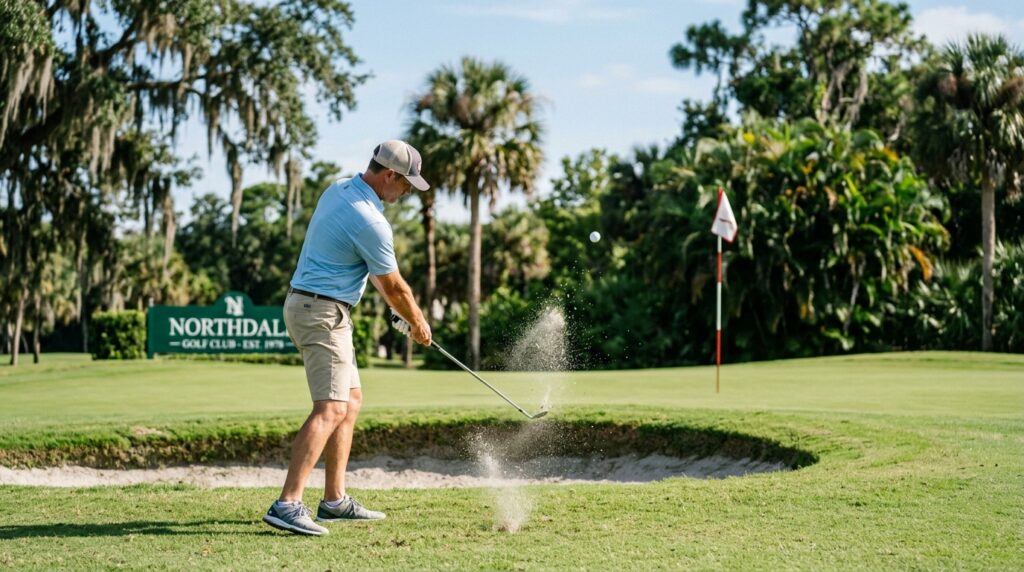
Golf is often described as a game of precision, but some of the most memorable shots happen when recovery and creativity become just as important as perfect ball striking. One of the shots that consistently captures attention is the flop shot. High, soft, and designed to land with minimal roll, this shot can help golfers escape difficult situations around the green and create scoring opportunities that would otherwise seem impossible. Whether you find yourself short sided behind a bunker or trying to stop the ball quickly on a firm green, understanding the right technique can make a significant difference. Practicing specialty shots becomes even more valuable when playing at a quality Golf Club in Tampa where course conditions reward touch and control around the greens. Learning to execute this type of shot properly requires more than simply opening the clubface and swinging harder. A controlled setup, confidence through impact, and understanding trajectory all play a role. This guide explains how golfers can develop consistency with the golf flop shot technique while understanding when to use a high lob shot and how practice can improve short game performance.
Mastering the Golf Flop Shot Technique at a Golf Club in Tampa
A flop shot looks dramatic when executed correctly, but the fundamentals behind it are surprisingly structured. The goal is to launch the ball high into the air with enough spin and softness that it lands and stops quickly instead of releasing across the green. Many players mistakenly believe they need to hit down aggressively or swing harder than normal, but the opposite is often true. Success starts with setup. Position the ball slightly forward in your stance and allow your weight to favor the lead side while maintaining balance. Opening the clubface before gripping the club increases loft and encourages the ball to launch higher. At a Golf Club in Tampa where practice greens often vary in firmness depending on conditions, learning how the ball reacts after landing becomes an important part of building confidence. A controlled wrist hinge and smooth acceleration through impact generally produce better results than trying to force the shot. One of the most common errors golfers make while learning golf flop shot technique is decelerating through the ball out of fear of hitting it too far. Deceleration often causes poor contact and inconsistent launch conditions. Instead, players should focus on maintaining speed through impact while allowing loft to create height naturally. Practicing this movement repeatedly builds comfort and helps players understand how clubface position changes trajectory. The idea behind a successful high lob shot is not maximum height for its own sake but enough height to create stopping power. Conditions around the green influence how much loft is necessary. Tight lies require cleaner contact while softer turf may allow slightly more aggressive swings. Spending time practicing at a Golf Club in Tampa creates opportunities to experiment with landing spots and understand how different greens react. Golfers who become comfortable with golf flop shot technique often discover they gain confidence in many other short game situations as well because the motion teaches feel, touch, and commitment. The ability to produce a reliable high lob shot also gives players more options instead of defaulting to bump and run shots every time they miss a green. Developing that versatility becomes increasingly valuable as course setups become more challenging and greens become firmer.
Using a High Lob Shot Successfully Around the Greens at a Golf Club in Tampa
Knowing how to hit the shot matters, but knowing when to use it matters even more. The flop shot is a specialty shot rather than a default option and should be chosen carefully depending on the lie, green conditions, and available landing area. Golfers often reach for the highest lofted club automatically, yet a smart decision begins by evaluating risk compared with reward. A Golf Club in Tampa often presents situations where elevated greens, short sided positions, or tightly mowed collection areas make higher trajectory shots useful. In those moments, a controlled high lob shot can become one of the most valuable tools in the bag. Before choosing the shot, golfers should evaluate whether there is enough green available to allow another lower trajectory option. If not, opening the face and committing to golf flop shot technique becomes a practical solution. A strong setup remains essential. Feet should be slightly open to encourage the club to travel along a path that supports loft creation. Hands should remain relaxed to preserve feel through impact. During practice sessions at a Golf Club in Tampa, golfers often discover that excessive manipulation hurts consistency more than it helps. The best high lob shot usually feels smoother and less aggressive than expected. Visualizing where the ball should land rather than where it should finish also improves results because stopping power comes from trajectory and spin rather than trying to guide the ball. Another important factor involves club selection. Many players use a lob wedge, but depending on conditions, a sand wedge can sometimes produce more predictable results. Golf flop shot technique should adapt to the lie instead of remaining identical every time. Wet turf, grain direction, and bunker placement all influence execution. Practicing multiple variations allows golfers to become more adaptable during real rounds. Confidence grows through repetition, and repetition becomes easier when golfers dedicate time to experimenting under realistic conditions. Spending time practicing at a Golf Club in Tampa helps players understand how local turf and greens influence rollout. Once golfers gain trust in the motion, they often find that the shot becomes less intimidating and more strategic. A dependable high lob shot gives players freedom to attack difficult pin positions and recover from mistakes with greater confidence.
Practicing Short Game Control and Building Confidence at a Golf Club in Tampa
The difference between golfers who occasionally pull off a spectacular flop shot and those who can rely on it consistently usually comes down to practice structure rather than talent. Specialty shots require repetition under controlled conditions so players can understand ball flight, landing patterns, and how small adjustments influence results. A Golf Club in Tampa provides an ideal environment for developing this type of touch because dedicated short game areas allow players to recreate realistic scenarios. Instead of hitting dozens of identical shots from perfect lies, effective practice should include varying distances, changing landing zones, and experimenting with different amounts of clubface openness. Golf flop shot technique improves fastest when golfers focus on outcomes rather than mechanics alone. Selecting specific targets and measuring rollout creates feedback that builds skill more effectively than simply repeating motion. Another useful strategy is creating practice challenges where each shot must land within a designated area before moving to the next station. This encourages concentration and simulates course pressure. Developing a reliable high lob shot also depends heavily on confidence because hesitation often leads to poor contact. Golfers who commit fully to the shot tend to produce better launch conditions than those trying to steer the ball. One reason practice at a Golf Club in Tampa becomes valuable is that players can observe how environmental conditions affect spin and stopping power throughout different times of day. Morning moisture, afternoon firmness, and wind conditions all influence outcomes. Incorporating those variables into practice produces more adaptable golfers. Another overlooked element involves mental preparation. Players should accept that even skilled golfers do not execute every flop shot perfectly. The goal is not perfection but predictability. Understanding likely misses helps reduce pressure during competitive rounds. Golf flop shot technique also becomes easier when players maintain realistic expectations and avoid attempting extreme height unless conditions truly require it. A controlled high lob shot often delivers better scoring results than an exaggerated version that increases risk. As confidence grows, golfers usually discover that improvement around the greens influences overall scoring more than distance gains elsewhere in the game. Consistent short game performance builds trust and allows players to recover more effectively throughout the round.
Developing Better Short Game Decisions at a Golf Club in Tampa
One of the most overlooked parts of learning specialty shots is understanding that execution and decision making work together. Even players with strong technical ability can struggle if they attempt difficult shots in situations that do not require them. Developing confidence around the greens starts with recognizing when the reward justifies the risk and when a simpler recovery option might lead to lower scores. Spending time practicing at a Golf Club in Tampa helps golfers understand these choices because different lies, turf conditions, and green speeds naturally create different short game demands. Many players become excited about learning advanced shots and immediately try to hit every recovery with maximum loft, but improvement comes from selecting the right option for the situation. This is where golf flop shot technique becomes especially valuable because the movement teaches touch, commitment, and creativity rather than simply producing height. Players who practice regularly at a Golf Club in Tampa often discover that understanding landing spots matters more than swinging harder. Learning how to control trajectory creates better stopping power and more consistent outcomes. A properly executed high lob shot should feel controlled and balanced while still producing enough height to reduce rollout after landing. Golfers frequently improve faster when they focus on predictable contact instead of trying to create dramatic ball flight. Another useful practice method is alternating between lower running shots and a high lob shot from the same position so the player learns to compare outcomes and select smarter options during real rounds. Consistent repetition of golf flop shot technique also improves confidence because players become less hesitant during execution. Many golfers struggle with deceleration, which usually comes from uncertainty rather than poor mechanics. Practicing at a Golf Club in Tampa provides opportunities to build trust and understand how different lies influence launch conditions. Another important lesson is accepting that not every situation calls for a high lob shot even if the player has the ability to execute one. Decision making remains part of scoring well. As players gain experience, golf flop shot technique becomes another reliable tool rather than a risky emergency option. Spending more time practicing these situations at a Golf Club in Tampa helps golfers become comfortable adapting their approach instead of relying on one standard recovery shot. Over time, players often discover that developing touch and learning to trust a controlled high lob shot improves confidence throughout the entire short game and creates more scoring opportunities across different course conditions.
Final Thoughts
Learning how to hit a flop shot that stops quickly can add a valuable layer of creativity and confidence to your game. While the shot may appear advanced, success usually comes from mastering setup, understanding trajectory, and practicing with intention rather than relying on dramatic swings or perfect conditions. Spending time refining touch and learning how different lies affect performance helps golfers make smarter decisions during real rounds. Practicing at a Golf Club in Tampa gives players opportunities to develop feel and understand how greens influence stopping power. Building comfort with golf flop shot technique allows golfers to approach challenging situations with more confidence and flexibility. Over time, adding a dependable high lob shot to your short game toolkit can improve recovery ability and create more scoring opportunities. Whether you use the shot occasionally or make it a regular part of your strategy, developing control around the greens remains one of the most rewarding investments a golfer can make.
FAQ’S
Q: What is the biggest mistake golfers make when trying to hit a flop shot that stops quickly?
A: One of the most common mistakes is decelerating through impact because of fear of hitting the ball too far. The blog explains that maintaining smooth acceleration and allowing the club’s loft to create height naturally leads to better contact and consistency. At Northdale Golf Club, golfers can practice this movement repeatedly to build confidence and improve short game control.
Q: When should golfers choose a flop shot instead of a lower-running chip shot?
A: A flop shot is most effective when golfers face limited green space, elevated greens, bunkers, or short-sided pin positions that require the ball to stop quickly. According to the blog, players should always evaluate risk versus reward before selecting the shot. Practicing these decisions at Northdale Golf Club helps golfers develop smarter short game strategies.
Q: How does practicing on different green conditions improve flop shot performance?
A: Different turf firmness, moisture levels, and green speeds can significantly affect how a ball reacts after landing. The blog highlights that practicing under varying conditions helps golfers understand rollout, spin, and stopping power more effectively. Northdale Golf Club provides an ideal environment for golfers to gain experience and adapt their golf flop shot technique to real playing conditions.
Q: Is a lob wedge always the best club for hitting a high flop shot?
A: Not necessarily. While many golfers automatically reach for a lob wedge, the blog notes that a sand wedge can sometimes produce more predictable results depending on the lie and course conditions. Northdale Golf Club encourages golfers to experiment with different wedges during practice to discover which option delivers the best control and consistency.
The app version is even better than the web. Super snappy and the login is instant. I’m really impressed with bjapplogin.
Honestly the best gaming experience I’ve had in a while. The graphics are crisp and the winning streaks have been amazing lately. 7888wingame is definitely my new go-to site.
I’ve been looking for a stable platform and this one really delivers. The interface is smooth and the payouts are fast. Definitely check out winpkr2 if you want a reliable experience.
[2944]Arion Login PH – Legit Slots at Gcash Casino sa Pilipinas,Gamitin ang arion login ph para sa mabilis na access. I-download ang arion app at subukan ang legit slots gcash philippines. Mag-register na at maglaro. visit: arion
Great promotions and the loyalty rewards are actually worth it. I have never seen such a generous platform before. Visit bdvcv999 for the best deals.
The graphics are crisp and the gameplay is very immersive. I appreciate the fair odds and the constant updates to the game library. phpanaloka is a gem.