
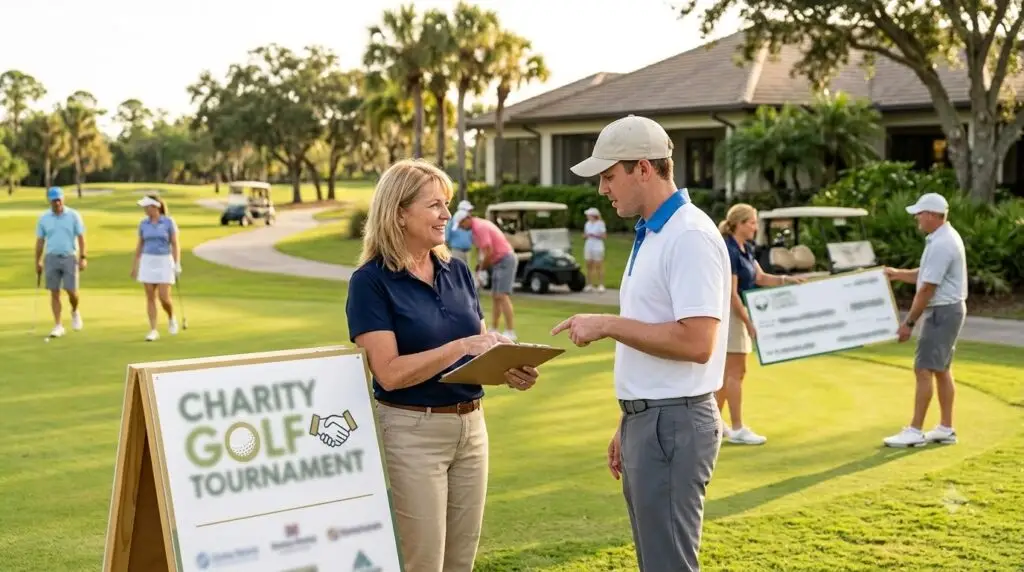
A charity golf tournament can do several things at once: raise money for a cause, attract new donors, strengthen sponsor relationships, and give supporters an event they genuinely enjoy attending.
But a profitable tournament requires more than reserving a golf course and selling foursomes.
You need to know how much you want to raise, what the event will cost, how many golfers you need, what sponsors will receive, how registration will work, which golf format makes sense, what happens if Tampa weather interrupts play, and how the event continues after the final putt.
If you are planning a charity golf tournament in Tampa, the most important number is not attendance.
It is:
How much money will the organization actually raise after all tournament expenses are paid?
Once that goal is clear, the rest of the event becomes much easier to build.
This guide walks through the process from the first budget meeting to post-tournament sponsor follow-up, including what to consider when planning a golf fundraiser at Northdale Golf Club.
How to Plan a Charity Golf Tournament
A well-organized tournament generally follows this order:
- Set the fundraising goal.
- Build the event budget.
- Estimate golfer and guest attendance.
- Choose a golf course and event date.
- Select the tournament format.
- Set player and foursome pricing.
- Create sponsorship packages.
- Plan additional fundraising activities.
- Open registration.
- Recruit golfers, sponsors, and volunteers.
- Finalize food, prizes, contests, and signage.
- Prepare the event-day schedule and weather plan.
- Run the tournament, scoring, meal, and awards.
- Calculate net funds raised.
- Thank participants and begin retaining sponsors for the next event.
The sequence matters.
Buying player gifts before knowing the event budget may be exciting. It is not financial planning.
1. Set the Fundraising Goal, Budget, and Player Price Together
These three decisions belong together because each one affects the others.
Start With Net Funds Raised
Determine how much money the organization wants to have after expenses.
The basic equation is:
Total Event Revenue − Total Event Expenses = Net Funds Raised
If an event generates $30,000 in registrations, sponsorships, and donations but costs $20,000 to operate, the fundraising result is $10,000 net.
That is the number the planning committee should use when evaluating success.
Identify Every Major Expense
Do not build the budget around green fees alone.
Depending on the event, expenses may include:
- Golf fees
- Golf carts
- Food and beverages
- Event or gathering space
- Player gifts
- Awards and prizes
- Sponsor signage
- Printing
- Registration software
- Payment-processing fees
- Photography
- Marketing
- Contest supplies
- Vendor services
- Insurance, if applicable
- Additional staffing
- Contingency funds
Request a detailed venue proposal so you know which items are included and which are separate.
Calculate the Cost Per Golfer
Once the major expenses are known, estimate the direct cost of serving each golfer.
Then decide how much each registration should contribute toward fundraising.
A simple pricing formula is:
Direct Cost Per Golfer + Desired Fundraising Contribution = Golfer Registration Price
For example, if your estimated direct cost is $110 per golfer and you want each registration to contribute another $40 toward the cause, a starting registration price would be $150.
That is only an illustration. Your actual pricing should reflect your venue costs, audience, fundraising goal, and sponsor support.
Decide How Registration Will Be Sold
Useful options include:
- Individual golfer
- Foursome
- Foursome plus sponsorship
- Sponsor package with golfer entries
- Non-golfing meal or awards guest
Do not copy another charity tournament’s price just because its flyer looks polished.
Their costs, sponsors, audience, and fundraising target may be completely different from yours.
2. Choose the Right Tampa Golf Venue and Tournament Format
The golf course is not simply where the round happens. It affects registration, pace of play, food, scoring, sponsor visibility, awards, weather procedures, and the overall guest experience.
Questions to Ask When Comparing Venues
Before booking, find out:
- How many golfers can the event accommodate?
- Which dates and start times are available?
- What is included in the golfer price?
- Are carts included?
- What starting formats are available?
- Is tournament scoring available?
- Can sponsor signage be displayed?
- Is food provided on-site?
- Is there space for registration?
- Is there space for an awards program?
- What happens if weather interrupts play?
- Who will coordinate with your organizer?
A slightly lower golfer rate is not necessarily a better deal if your team must separately coordinate food, scoring, event space, and signage.
Choose a Format That Fits the Audience
For most charity tournaments, the golf should be competitive enough to stay interesting without making occasional golfers feel that they accidentally entered qualifying school.
Four-Person Scramble
A scramble is often practical for a mixed-skill charity field.
Each golfer tees off. The team chooses its preferred shot, and everyone plays the next stroke from that location. The process continues until the hole is completed.
A scramble works particularly well because:
- Beginners can contribute
- Experienced golfers still influence the result
- Players work as a team
- One bad shot does not ruin a hole
- It suits corporate and donor groups with mixed abilities
Best Ball
In best ball, each golfer plays their own ball and the team’s best eligible score counts on each hole.
This gives participants more individual golf and can suit a more experienced field.
Stableford
Stableford awards points based on each hole’s result rather than relying only on total strokes.
This can prevent one difficult hole from overwhelming a player’s entire competitive round.
Stroke Play
Traditional stroke play works best when the field is more competitive and participants are comfortable completing every hole under individual scoring.
For a broad charity audience, a scramble is generally easier to manage.
Tee Times or Shotgun Start?
With consecutive tee times, groups start one after another.
This can work for smaller events.
With a shotgun start, groups begin from different holes at approximately the same time. A shotgun can make it easier for golfers to finish within a similar window so everyone can attend the meal and awards together.
Availability depends on the course, date, and group size, so confirm the starting structure before publishing your event schedule.
3. Create Sponsorships and Fundraising Opportunities
Player registrations do not have to carry the entire fundraising target.
A strong tournament can generate revenue from several sources.
Build Simple Sponsorship Levels
Do not create seven packages that require a flowchart to understand.
A clean structure might include:
Presenting Sponsor
Possible benefits:
- Highest-level event recognition
- Prominent logo placement
- Opening or awards acknowledgment
- Premium signage
- Golfer entries
- Website or email acknowledgment
Major Sponsor
May include:
- Event signage
- Digital acknowledgment
- Golfer entries
- Awards-program recognition
Hole Sponsor
A lower-cost option that may include a branded sign at a designated hole and recognition in tournament materials.
Contest Sponsor
Attach sponsorship to a specific activity such as:
- Closest to the pin
- Longest drive
- Putting contest
In-Kind Sponsor
Businesses can also contribute products or services such as:
- Auction items
- Player gifts
- Photography
- Printing
- Food
- Awards
- Gift cards
Track in-kind contributions separately so the committee knows how much event expense they offset.
Be Precise About Sponsor Benefits
For tax-exempt organizations, the IRS distinguishes qualified sponsorship acknowledgment from advertising.
Generally, acknowledging a sponsor’s name, logo, or product lines without providing a substantial return benefit can qualify as sponsorship treatment. Promotional language such as price information, comparative claims, endorsements, or inducements to purchase may instead constitute advertising and can affect unrelated business income tax treatment.
If your organization is tax-exempt and packages include advertising, exclusive commercial arrangements, or significant sponsor benefits, have the structure reviewed by a qualified tax professional.
Add Fundraising Beyond Sponsorships
Depending on your organization and event, additional opportunities may include:
- Silent auction
- Hole sponsorships
- Putting contest
- Closest-to-the-pin contest
- Longest drive contest
- Mulligans under the tournament’s rules
- Donation opportunities
- Sponsor-hosted activities
- Other legally compliant fundraising programs
Choose a few activities that participants can understand quickly.
A golf fundraiser does not become more profitable simply because every tee box contains a different payment mechanism.
Be Careful With Florida Raffles
Florida law specifically regulates drawings by chance conducted by qualifying charitable and nonprofit organizations.
Florida Statute § 849.0935 requires applicable drawing materials to disclose, among other information, that no purchase or contribution is necessary. The statute also prohibits requiring an entry fee, donation, payment, proof of purchase, or contribution as a condition of entering or being selected to win.
If you plan a raffle or drawing, review the full current legal requirements and have your organization’s specific setup checked before promoting it.
4. Make Golfer Registration Easy
Registration should answer the basic questions before someone has to email the organizer.
Include:
- Organization or beneficiary
- Tournament date
- Golf course
- Check-in time
- Start time
- Golf format
- Individual golfer price
- Foursome price
- What registration includes
- Food details
- Sponsorship options
- Contact information
- Weather or cancellation policy
Collect Only Useful Information
Depending on your event, your registration form may need:
- Golfer name
- Phone
- Company
- Preferred team or foursome
- Sponsor affiliation
- Dietary requirements
- Shirt size, if apparel is included
If handicap information is irrelevant to your scramble, there is little reason to ask every participant for it.
Communicate Again Before the Event
Send participants a reminder several days before the tournament containing:
- Arrival time
- Course address
- Parking instructions
- Start time
- Format
- Dress expectations
- Food information
- Weather instructions
- Organizer contact information
Do not assume participants will reopen the confirmation email they received four months earlier.
5. Use a Tournament Planning Timeline
A larger golf fundraiser benefits from several months of preparation.
4 to 6 Months Before
Complete the foundation:
- Set fundraising goal
- Build preliminary budget
- Select preferred date
- Request venue proposals
- Choose tournament format
- Establish committee responsibilities
- Create sponsorship packages
3 to 4 Months Before
Begin selling the event:
- Open golfer registration
- Start sponsor outreach
- Contact previous participants
- Begin auction or prize outreach
- Recruit volunteers
- Launch email and digital promotion
6 to 8 Weeks Before
Shift from selling to execution:
- Review registration progress
- Confirm major sponsors
- Select food
- Order player gifts
- Confirm contests
- Collect sponsor logos
- Arrange photography if needed
- Assign volunteer roles
2 to 4 Weeks Before
Finalize:
- Foursomes
- Sponsor signage
- Awards and prizes
- Food headcount
- Contest instructions
- Registration materials
- Event-day schedule
- Volunteer assignments
Final Week
Confirm with the golf course:
- Final golfer count
- Start structure
- Cart plan
- Food count
- Registration area
- Scoring process
- Contest holes
- Sponsor signage
- Awards location
- Weather procedure
At this point, the planning committee should be checking details, not inventing new parts of the tournament.
6. Build an Event-Day Operation Plan
A good event day feels relaxed to participants because the complicated work has already happened behind the curtain.
Sample Morning Tournament Schedule
| Time | Activity |
| 7:00 AM | Organizer and volunteer arrival |
| 7:30 AM | Player registration opens |
| 8:00 AM | Breakfast, putting, networking |
| 8:20 AM | Welcome and player briefing |
| 8:30 AM | Golf begins |
| 1:00 PM | Approximate finishing window |
| 1:30 PM | Food and final scoring |
| 2:00 PM | Awards and sponsor recognition |
| 2:30 PM | Fundraising close |
| 3:00 PM | Closing remarks |
This is a sample schedule rather than a guaranteed golf-round duration.
Build buffer time into the schedule for:
- Late arrivals
- Golf delays
- Weather
- Score collection
- Meal service
- Photos
- Awards preparation
Organize Registration
Before golfers arrive, prepare:
- Player list
- Foursome assignments
- Sponsor list
- Scorecards or scoring instructions
- Event schedule
- Player gifts
- Contest instructions
- Food information
- Volunteer contacts
Keep registration simple.
One volunteer should not simultaneously be checking golfers in, fixing payment issues, explaining the scramble, distributing shirts, and locating someone’s missing teammate.
Assign Volunteers Specific Jobs
Possible roles include:
- Registration
- Contest-hole support
- Sponsor assistance
- Photography
- Auction support
- Score collection
- Awards setup
- Guest assistance
Each volunteer should know where to report, when to arrive, what they are responsible for, and who can make decisions.
Keep the Player Briefing Short
Before golf begins, explain only what participants need:
- Tournament format
- Tee assignments
- Pace expectations
- Contest holes
- Mulligan rules, if applicable
- Scoring
- Tie-break procedure
- Weather instructions
- Post-round gathering location
The golfers came to play a tournament, not attend its board meeting.
Have a Real Weather and Lightning Plan
Weather planning is particularly important for an outdoor tournament.
The National Weather Service recommends that organized outdoor sports events establish a lightning safety plan in advance. The plan should identify who monitors conditions, when activity stops, where participants go for safe shelter, and when play can resume.
Confirm the golf course’s procedures before the event and follow course instructions immediately if play is suspended.
Do not create a separate unofficial weather system on tournament day.
7. Plan the Post-Round Program and Follow-Up
The tournament is not finished when the final scorecard arrives.
Keep the Closing Program Organized
A simple order works well:
- Food and drinks
- Final scoring
- Golf awards
- Contest winners
- Sponsor recognition
- Short message about the cause
- Auction or fundraising close
- Thank-you remarks
The charitable mission should remain visible.
Participants should leave knowing what they supported, not merely who won closest to the pin.
Measure the Actual Result
After the tournament, calculate:
- Total gross revenue
- Total expenses
- Net funds raised
- Sponsorship revenue
- Player registration revenue
- Additional fundraising revenue
- Number of golfers
- Number of sponsors
- New donors or contacts
Compare the net result with the fundraising goal established at the beginning.
Follow Up Quickly
Within the days following the event, send participants:
- Thank-you message
- Event photos
- Results, if relevant
- Funds-raised update when available
- Brief explanation of impact
- Sponsor acknowledgment
- Future involvement opportunity
Contact major sponsors personally.
A sponsor who only hears from the organization when next year’s invoice is ready is being treated like an ATM with a logo.
Planning a Charity Golf Event at Northdale Golf Club
For organizers considering Northdale Golf Club, it is important to separate what the venue currently publishes from what should be confirmed through an individual event proposal.
Northdale’s current Outings & Private Events page lists:
- Golf and pickleball group packages
- Corporate, charity, and social events
- Event coordination and setup
- Food and beverage packages
- Catering from the Lounge
- Custom signage
- Scorekeeping
- Music and A/V support
- Reserved indoor spaces
- Outdoor patio space
Northdale’s golf course itself is public and currently features an 18-hole, par-72 Ron Garl-designed layout with four tee boxes, cart rentals, a practice green, and pro shop essentials.
These features can make it possible to keep golf, food, scoring, sponsor recognition, and the post-round gathering at the same property.
However, Northdale does not publish one universal charity golf tournament package, capacity, price, or starting structure on the current event page. Organizers should therefore request current details for their specific tournament rather than assuming a service or price is automatically included.
Questions to Ask Northdale Before Booking
Have these answers before committing to the event:
- What dates and start times are available?
- How many golfers can the event accommodate?
- Are consecutive tee times, shotgun starts, or both available?
- What is included in the golfer price?
- Are carts included?
- What food and beverage packages are available?
- Which space can be used for registration?
- Which space is available for the post-round meal and awards?
- What sponsor-signage options are available?
- What scoring support is included?
- What A/V equipment is available?
- What are the deposit and final-headcount deadlines?
- What is the cancellation policy?
- What is the weather or rain policy?
- Who will be the primary event contact?
Northdale currently lists (813) 962-0428 and reservations@northdalegolf.com as contact information.
Charity Golf Tournament Checklist
Planning and Finance
- Fundraising goal established
- Net-revenue target established
- Preliminary budget approved
- Golfer target selected
- Venue proposal reviewed
- Registration pricing finalized
Golf and Venue
- Tournament format selected
- Starting method confirmed
- Carts confirmed
- Foursomes planned
- Scoring procedure confirmed
- Contest holes selected
- Weather procedure confirmed
Sponsorship and Fundraising
- Sponsor packages created
- Sponsor benefits clearly defined
- Sponsor outreach underway
- Auction or additional fundraising activities selected
- Sponsor logos collected
- Required legal or tax review completed where applicable
Guest Experience
- Registration live
- Food selected
- Dietary requirements collected
- Player gifts ordered
- Awards prepared
- Sponsor signage produced
- Post-round space confirmed
Event Day
- Player list ready
- Foursome assignments ready
- Volunteers briefed
- Registration materials organized
- Player instructions prepared
- Sponsor signs placed
- Score collection assigned
- Awards program prepared
After the Event
- Revenue reconciled
- Expenses reconciled
- Net funds raised calculated
- Donors thanked
- Sponsors thanked
- Volunteers thanked
- Event photos shared
- Impact communicated
- Future sponsor and participant interest recorded
Frequently Asked Questions
How far in advance should I plan a charity golf tournament in Tampa?
For a larger tournament involving sponsors, player gifts, catering, signage, prizes, and a substantial golfer field, beginning approximately four to six months ahead provides more time to secure the venue and recruit sponsors. Smaller events with flexible dates may need less lead time.
What is the best format for a charity golf tournament?
A four-person scramble is often a strong choice for mixed-skill charity events because golfers compete as teams and less-experienced players can contribute without having to rely entirely on their individual score.
How should I set the golfer registration price?
Calculate the direct event cost per golfer first. Then determine how much you want each registration to contribute toward fundraising. Sponsorship income can also help cover event costs and reduce how heavily the fundraising goal depends on golfer fees.
What are the best ways to raise money at a charity golf tournament?
Potential revenue sources include golfer registrations, sponsorships, hole sponsors, auctions, donations, mulligans under the tournament rules, putting contests, and other legally compliant activities. The best mix depends on your audience and organization.
Can beginners participate in a charity golf tournament?
Yes. A scramble format and mixed-skill teams can make a charity tournament accessible to occasional and newer golfers while still allowing experienced players to compete.
Can a nonprofit charge participants to enter a raffle in Florida?
Organizations should be careful with this. Florida Statute § 849.0935 prohibits qualifying organizations operating drawings under that section from requiring payment, purchase, or contribution as a condition of entering or winning, and applicable materials must disclose that no purchase or contribution is necessary. Review the complete current requirements before running a drawing.
Does Northdale support charity events and golf groups?
Northdale’s current event page lists golf group packages as well as corporate, charity, and social events. It also lists coordination, food and beverage service, signage, scorekeeping, A/V support, and gathering spaces. The exact setup for a charity golf tournament should be confirmed through a current proposal.
Can Northdale provide food and a post-round gathering space?
Northdale currently lists catering from the Lounge, food and beverage packages, reserved indoor space, and an outdoor patio among its event offerings.
Can Northdale help with tournament scoring and sponsor signage?
The current event page lists custom signage and scorekeeping among Northdale’s included event services. Confirm the exact level of support and customization when requesting your tournament proposal.
Final Takeaway
A successful charity golf tournament in Tampa begins with one clear objective:
Raise meaningful net funds while giving golfers, donors, and sponsors an event worth supporting again.
Build the budget around that goal.
Choose a venue that can support both the golf and the surrounding event.
Select a format that works for your participants.
Give sponsors clear value.
Keep registration easy.
Plan the event day before golfers arrive.
And continue communicating with donors and sponsors after the tournament ends.
For organizations considering Northdale Golf Club, its current event offering combines golf group packages with event coordination, catering, signage, scorekeeping, A/V support, and gathering areas. The exact charity golf tournament package, pricing, capacity, and available start format should be confirmed directly for your event.
To discuss current options, prepare your preferred date, estimated golfer count, fundraising goal, tournament format, food requirements, and sponsorship needs, then contact Northdale Golf Club at (813) 962-0428 or reservations@northdalegolf.com.